
3 Seismic Challenges Facing Contact Centers
But when flexible work became normalized, with only 11% of agents desiring full-time on-site roles, the legacy operating system began to fracture.
With Manar Morales
Manar Morales explains how workplace flexibility designed around outcomes, not presence, can reduce hybrid friction and protect accountability.
Categoriessystems physics
This Fast Leader Show episode is flexibility by Design, Not Default with Manar Morales. Here is what the conversation covers, then the key insights.
Manar Morales argues that flexibility works when leaders design it around output rather than office presence. Her examples show how clear measures ease hybrid friction.
Executive Summary: Key Insights
Intentional Architecture Over Default Policies:
True workplace flexibility must be engineered by design rather than dropped in as a generic corporate policy, aligning operational constraints with clear purpose.
Separating Performance From Presence:
Evaluating commitment based on FaceTime triggers presenteeism and masks underlying systemic drag, whereas clear output metrics protect both capacity and accountability.
Mitigating Hybrid Friction:
Uncoordinated flexibility creates friction across multi-generational teams, requiring structural alignment levers rather than forced compliance or arbitrary return-to-office mandates.
In many modern corporate offices, employees commute through heavy traffic only to sit in a cubicle and join video calls with colleagues located three floors down. We spent years assuming that physically assembling human beings in a single building would automatically produce collaboration. The reality is that proximity without purpose simply creates cognitive fatigue.
Presence is not performance.
When Manar Morales examined law firms navigating post-pandemic work arrangements, a fascinating disconnect emerged. Senior partners often resisted returning to physical offices while expecting junior associates to maintain full in-office presence. Ponder that for a moment. Organizations frequently try to resolve this friction by dropping a rigid policy template into an outdated operating model.
Policy drops fail because systems govern behavior.
I will be honest with you, I spent years early in my career operating under the rule of arriving before the boss and leaving after. We treated FaceTime as proof of dedication because our legacy frameworks lacked the structural architecture to measure actual impact. When we allow appearance to replace alignment, organizations pay an invisible Drift Tax through burnout, turnover, and uncoordinated work.
Unmeasured drag erodes enterprise momentum.
When leadership designs flexibility around specific operational purpose rather than personal preference, we insulate human capacity from Execution Drift. By setting clear guardrails and evaluating output instead of physical presence, teams naturally build sustainable rhythm. We protect the dignity of our people when we fix the underlying system instead of demanding heroics.
Flexibility impacts performance positively when organizations separate physical presence from output metrics. In legacy operating systems, management relied on physical oversight as a proxy for productivity, which inadvertently encouraged presenteeism rather than actual impact. By establishing clear environmental guardrails and objective performance metrics, organizations enable autonomous execution while maintaining absolute operational rigor. Friction occurs not because flexibility is granted, but because the underlying operating system lacks the structural clarity required to track progress without manual supervision.
Mandates fail because they address the location of work rather than the mechanics of coordination. When an enterprise experiences declining velocity or poor cross-silo alignment, executive teams frequently diagnose the issue as a lack of physical presence. However, forcing employees back into an office without changing how work is structured simply relocates systemic friction back into the building. If daily workflows require employees to join virtual meetings from individual desks, the physical facility adds commute stress and cognitive load without resolving the root cause of execution drag.
Leaders accommodate multi-generational expectations by adopting a purpose-driven framework rather than enforcing a single work style. Different generations often prioritize different aspects of work, ranging from structured in-person mentorship to schedule autonomy. Rather than forcing a compromise or defaulting to individual preferences, organizations must anchor flexibility to business purpose and team outcomes. Designing explicit execution pathways allows teams to leverage varied working styles while ensuring all members remain fully aligned to enterprise goals.
Workplace flexibility is under pressure again. Return-to-office mandates, hybrid confusion, and burnout at all-time highs are colliding with five generations who do not agree on what “showing up” means.
Author Manar Morales (The Flexibility Paradigm: Humanizing the Workplace for Productivity, Profitability and Possibility) argues the fix is not a free-for-all schedule. It is flexibility by design, not by default: a win-win operating approach with guardrails, clear expectations, and culture change.
This Fast Leader Show episode, the official podcast of Execution Architects, gives leaders a practical way to stop treating flexibility like a perk and start treating it like system architecture.
Flexibility is not a trade-off for performance. If someone is not performing, that is a performance issue for managers and HR, not proof that hybrid “failed.” Holistic flexibility covers where, when, and how work gets done, and it must match the nature of the job. Leaders who drop a policy without intentional design, training, and measurement usually get implementation failure, then blame flexibility itself.
Manar walks through the evolution of flexibility and the COVID “grand experiment” that forced organizations into virtual work. The lasting lesson is not that every company should stay fully remote. It is that leaders must be deliberate about return on experience: what deserves in-person time, what works virtually, and how teams stay connected 100% of the time in hybrid settings.
She also challenges FaceTime theater. Seeing someone at a desk is not proof of impact. Output, contribution, and clarity of expectations beat presenteeism. For multi-generational workplaces, she recommends a yes-and mindset: value different working styles while protecting what the business needs.
Pros: broader talent pools, stronger retention, better autonomy against burnout, DEI support when degendered and destigmatized, and culture that matches modern work reality.
Cons / risks if done poorly: unclear expectations, time-flexibility confusion, proximity bias, affinity bias, and policy theater without culture change.
Fast Leader Show is the official podcast of Execution Architects. To build alignment with a post-AI operating system, visit executionarchitects.com.
But when flexible work became normalized, with only 11% of agents desiring full-time on-site roles, the legacy operating system began to fracture.
We often blame frontline leaders or employees when execution breaks down, rather than diagnosing the environment that forced the error in the first place.
In this episode, Wayne Washington shares his experience on how your company can apply these changes and achieve proper alignment to reach strategic goals.
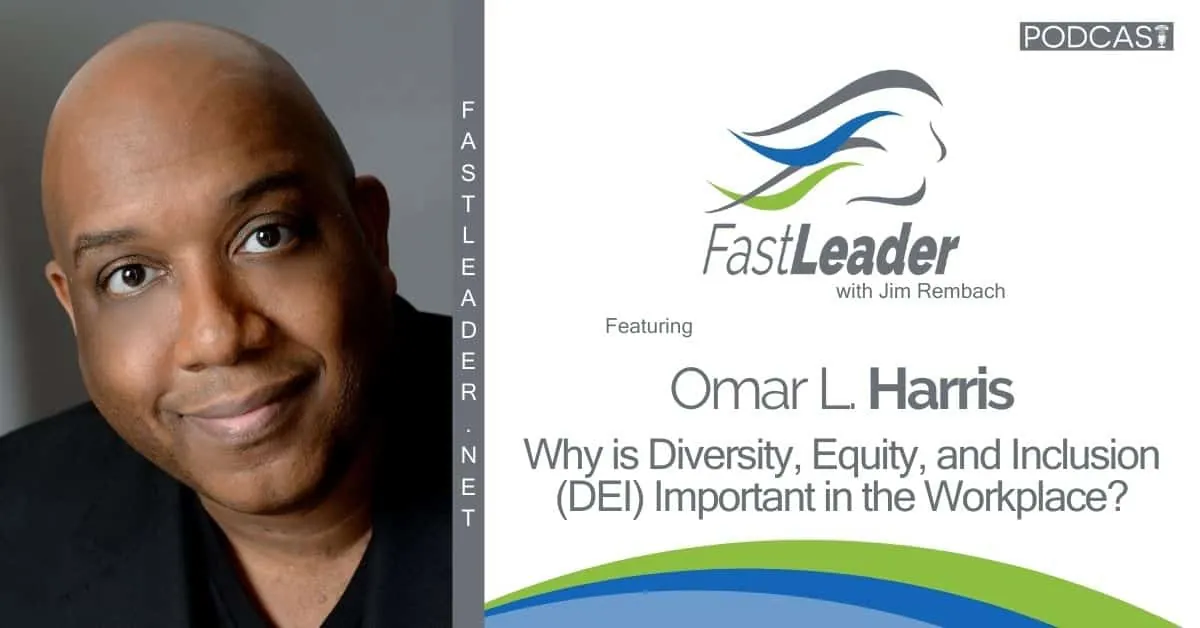
Every modern workforce has a discussion revolving around these three words, but what exactly is the difference between diversity, equity, and inclusion?
Watch on YouTube, or take the audio with you.