
Embracing Emotional Intelligence
Organizations must shift from static training initiatives to dynamic execution scaffolding that guides behavior directly within daily workflows.
John Fisher explains why organizational change succeeds one person at a time when leaders provide the scaffolding people need to adapt.
Categoriessystems physics
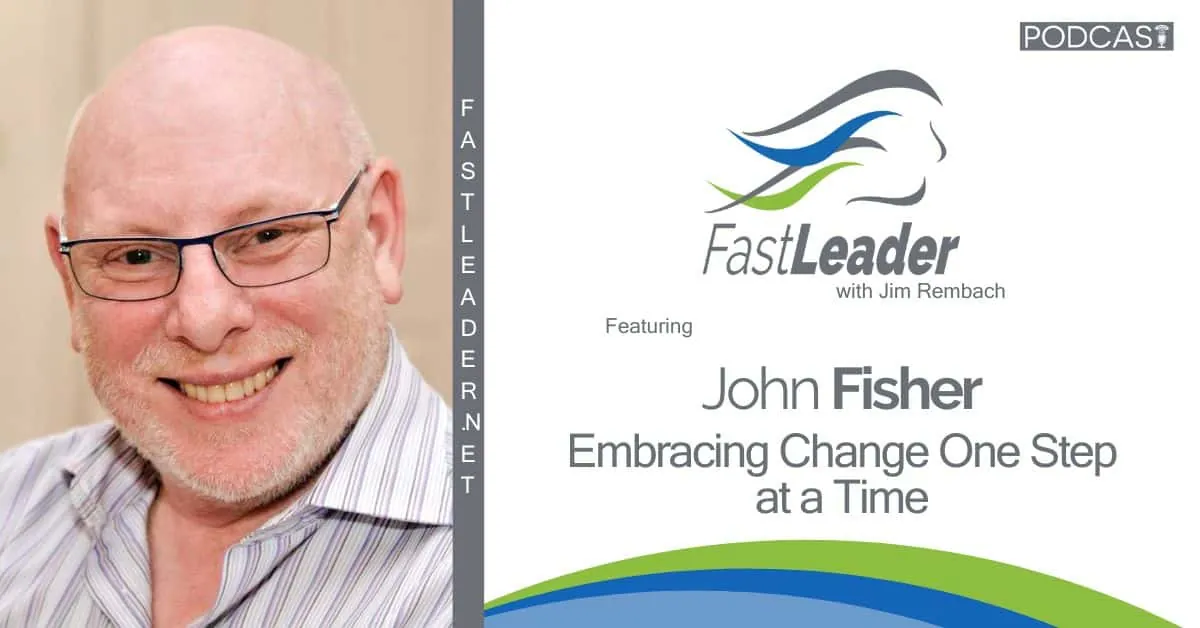
This Fast Leader Show episode covers embracing Change One Step at a Time. Here is what the conversation covers, then the key insights.
John Fisher traces how change becomes personal when environments threaten identity, status, or control. His stories show why people need scaffolding, not blanket mandates.
Executive Summary: Key Insights
Individualized Adaptation:
Organizational change does not occur en masse; it happens one person at a time by addressing personal identity and operational loss.
Environmental Scaffolding:
Traditional command-and-control oversight creates mutual operational friction, requiring structural system design rather than increased surveillance.
Script Flexibility:
Rigid operational scripts increase cognitive load in complex environments, making flexible guidance essential for sustained frontline problem resolution.
When John Fisher left school at sixteen to join the Royal Air Force working on aircraft radar systems, he felt like a poster boy for impostor syndrome. He eventually realized his true calling was not the hardware on the aircraft, but the humans operating inside the organization. Early on, he taught his friends how to play squash simply so he would have opponents to play against, only to watch them quickly surpass his own skill level.
That quiet moment contained a profound operational truth.
We often attempt to drive organizational transformation by treating people like standardized components in an engineering blueprint. When a global manufacturing firm transitioned its executive directors into an open plan office layout, management assumed the move would foster complete transparency. Instead, frontline employees worried the directors were scrutinizing their every move, while the directors sat frozen, convinced the entire floor was judging their work.
Sit with that.
When leadership changes the physical or operational environment without updating the underlying operating system, human biology defaults to self-protection. Without supportive scaffolding, team members revert to The FONE Factors to protect their sense of identity and competence. This natural human reflex creates systemic friction, pulling strategic initiatives off target and breaking the Kinetic Chain of Execution across cross-functional silos.
I have sat in that room and made the exact same mistake.
We tend to blame employee defiance or a lack of leadership discipline when strategic shifts stall. In reality, modern operational velocity has simply crossed a threshold that legacy administrative designs were never built to hold. Upgrading our execution architecture requires moving past command-and-control mandates to design environments where aligned execution becomes the path of least resistance.
Knowing what you know now, what would you do differently?
Frontline resistance is rarely a sign of worker defiance or poor attitude. When organizations introduce new workflows or scripts without addressing operational loss, human biology perceives the change as a threat to personal competence and identity. Legacy administrative designs rely on pressure to enforce compliance, which increases cognitive load and triggers an operational risk reflex. Building supportive environmental scaffolding allows teams to adopt new behaviors without feeling their core identity is under attack.
Increased physical or digital surveillance often produces the opposite of its intended result. When employees know they are under constant observation, cognitive strain increases and individuals shift into protective routines to minimize personal exposure. This biological guarding response creates mutual anxiety between leadership and staff, slowing down decision velocity across the entire organization. Effective systems focus on governing behavioral alignment through clear environmental cues rather than relying on direct surveillance or micromanagement.
Traditional change management frameworks rely heavily on top-down communication and periodic training workshops. Research demonstrates that standard instruction fails to sustain long-term behavioral application once operational pressure increases. The resulting gap creates operational drag, forces secondary spend to rework failed initiatives, and increases talent turnover. Upgrading the underlying operating system protects margins by eliminating the hidden costs associated with misaligned cross-silo execution.
In this enlightening episode, Jim Rembach interviews John Fisher, delving into the heart of leadership and the transformative power of embracing personal change for organizational success. Fisher, with his rich background in psychology and business coaching, shares invaluable insights into the journey from self-doubt to self-discovery, underscoring the critical role of personal growth in driving effective leadership and fostering a conducive environment for change.
The conversation illuminates the intricate dynamics of leadership in the modern workplace, emphasizing the necessity of understanding individual motivations and the impact of personal identity on resistance to change. Fisher’s narrative is a compelling testament to the transformative potential of self-awareness and adaptability in navigating the complexities of organizational leadership.
Moreover, the discussion sheds light on the challenges and opportunities within call centers, offering innovative perspectives on leadership development, employee engagement, and the pivotal role of empathy in redefining leadership paradigms. Fisher’s approach to leadership—centered on human connections, understanding, and mutual growth—provides a refreshing and deeply humanistic perspective on managing change and fostering a culture of inclusivity and adaptability.
This episode is a must-listen for anyone keen on exploring the depths of leadership, the psychology of change, and the uncharted territories of personal and organizational development. Fisher’s journey and insights offer a rich tapestry of lessons that resonate with leaders, coaches, and individuals striving to make a meaningful impact in their organizations and beyond.
Don’t miss this opportunity to gain a deeper understanding of the nuances of leadership and change. Tune in to this episode and embark on a journey of discovery, learning, and transformation.
In this episode, you can learn:
By following these steps, drawn from the insightful discussion with John Fisher, you can develop leadership skills that are not only effective but also deeply resonant on a personal level. Remember, the journey to leadership excellence is both personal and collective, requiring ongoing reflection, adaptation, and genuine connection with those you lead.
Focus on the people around you. If I had realized earlier the significance of human connections over my engineering tasks, I would have transitioned faster and with greater confidence.
Me. My own limiting beliefs.
It’s easier to ask for forgiveness than permission.
Humor.
Vance Packard’s “The Hidden Persuaders”
In this engaging episode with John Fisher, we’ve traversed the landscape of leadership, change, and the profound impact of personal experiences on professional growth. Fisher’s journey from the RAF to becoming a revered business psychologist underscores the essence of adaptability and the power of understanding individual dynamics within organizational change. His insights into personalizing change, fostering an inclusive work environment, and the crucial role of continuous learning offer valuable lessons for leaders at all levels. As we conclude, it’s clear that embracing change one step at a time isn’t just about navigating the challenges of leadership; it’s about transforming them into opportunities for growth and development. Whether you’re leading a small team or an entire organization, Fisher’s perspectives offer a roadmap to more effective, empathetic, and dynamic leadership.
John’s LinkedIn: https://www.linkedin.com/in/c2dlimited/
John’s Facebook: https://www.facebook.com/c2d.co.uk/
C2D website: https://www.c2d.co.uk/
Fast Leader Show on YouTube: https://www.youtube.com/c/FastleaderNet
Fast Leader Show on Apple Podcast: https://apple.co/364qAA2
Fast Leader Show on Facebook: https://www.facebook.com/FastLeaderShow
Fast Leader Show on Twitter: https://twitter.com/fastleadershow
Fast Leader Show on LinkedIn: https://www.linkedin.com/company/fastleader.net
More episodes related to change: https://www.fastleader.net/ceiling-of-complexity
Thanks for tuning into this week’s episode! If the information in our weekly conversations and interviews has helped you in your journey, please head over to Apple Podcasts, subscribe to the Fast Leader Show, and leave us an honest review.
Your reviews and feedback will not only help us continue to deliver great, helpful content, but it will also help us reach even more amazing people just like you!
Fast Leader Show is the official podcast of Execution Architects. To build alignment with a post-AI operating system, visit executionarchitects.com.
Organizations must shift from static training initiatives to dynamic execution scaffolding that guides behavior directly within daily workflows.
Without environment-level scaffolding that guides real-time choices in the flow of work, strategic intent fails to reach frontline execution.
Without environment-level scaffolding that aligns daily workflows with strategic intent, corporate statements remain isolated from actual execution.
When leaders step back from micro-managing tasks and focus on creating the environmental scaffolding for their teams, execution becomes the default path.
Watch on YouTube, or take the audio with you.