
Unlock Your Potential: A Numbers Game to Success
Kyle Austin Young explains how risk-aware planning improves the odds of complex goals when success depends on many connected decisions.
When leaders face high operational pressure, punitive measures trigger protective biological reflexes that lead to information hoarding and risk avoidance.
Categoriesstrategy execution
This Fast Leader Show episode covers blueprints for Success in Work and Life. Here is what the conversation covers, then the key insights.
Preparation and clear environmental boundaries are what keep people grounded when stress spikes. Without a structural blueprint, even the most capable leaders fall back on daily survival routines.
Executive Summary: Key Insights
Structural Intentionality:
Leaders must design personal and operational rhythms that prevent routine demands from overriding strategic clarity.
Biological Autopilot:
When operational pressure rises, human systems naturally revert to familiar habits unless environmental scaffolding is installed to govern choices.
Expectations-Based Alignment:
Execution stability relies on setting crystal-clear expectations and providing continuous support rather than relying on punitive enforcement.
When Jeff Eschliman described stepping onto construction sites at eight years old in Mesa, Arizona, or navigating an armored personnel carrier through the intense pressure of Iraq, he highlighted a fundamental truth about human mechanics. Preparation and clear environmental boundaries are what keep people grounded when stress spikes. Without a structural blueprint, even the most capable leaders fall back on daily survival routines.
Sit with that.
Jeff shared an epiphany from fifteen years ago when he was working late on the final night of a fiscal quarter for a public company. He realized he was exhausting his capacity trying to check operational boxes for his business while leaving his personal life to chance. That moment led him to build a structured white-space routine to systematically review metrics and prevent Execution Drift.
It was a pivotal realization.
Most enterprise leaders face this exact operational friction every day. We inherit administrative operating systems built for a linear world, and when post-AI complexity hits, our Biological Autopilot takes over to conserve cognitive bandwidth. When we try to bridge that gap with sheer willpower or tighter enforcement, we create friction rather than velocity.
Systemic alignment requires structural design, not heavier pressure.
Legacy administrative designs rely on manual oversight, continuous meetings, and individual willpower to carry strategic intent across functional silos. As market velocity and operational complexity exceed human cognitive capacity, leaders naturally prioritize immediate tactical fires over long-term strategic alignment. This structural mismatch creates invisible friction, causing daily behaviors to drift from executive strategy without anyone actively deciding to break protocol.
Traditional accountability models often default to punitive reviews or reactive enforcement when performance targets are missed. When leaders face high operational pressure, punitive measures trigger protective biological reflexes that lead to information hoarding and risk avoidance. Sustainable alignment occurs when organizations replace forced compliance with structural scaffolding and clear expectations that make aligned execution the easiest operational path.
White space is not passive downtime, but a deliberate operational routine designed to pause reactive management and evaluate structural metrics. By establishing predictable cadences for review and calibration, leaders step out of immediate tactical friction to assess systemic performance. This deliberate pause preserves cognitive bandwidth, reduces decision whiplash, and ensures strategic initiatives remain anchored against daily operational noise.
Now that you know this what will you do differently?
In an inspiring exchange, Jeff Eschliman shares his journey from the idyllic landscapes of Fortuna, California, to becoming a visionary leader in the construction industry. His story, woven with the values instilled by his family and the wisdom gained from his military service, unfolds a compelling narrative on leadership, teamwork, and personal development. Eschliman delves into the pivotal moments that shaped his career, from early beginnings on construction sites to his transformative military experiences driving an armored vehicle in Iraq. These experiences not only honed his leadership skills but also instilled a profound belief in the importance of preparation and teamwork.
Jeff discusses the significance of integrating core values into one’s life and career, emphasizing the transformative power of a one-page plan. This strategic tool, he explains, is not just about setting goals but about aligning one’s actions with their deepest values and competencies. Through personal anecdotes and professional insights, Eschliman inspires listeners to reflect on their own paths, encouraging them to craft a fulfilling journey that resonates with their true selves.
But it’s not all about looking inward. Jeff’s narrative is a testament to the impact of leadership on others, comparing the joy of mentoring to watching his children grow. He underscores the importance of self-care, continuous learning, and setting intentional goals as cornerstones of effective leadership.
This episode is a treasure trove of wisdom for anyone looking to navigate the complexities of personal and professional growth. Jeff’s journey is a powerful reminder of the resilience, dedication, and strategic planning required to lead a fulfilling life and make a lasting impact on those around us.
Don’t miss out on this profound conversation. Tune in to discover how you can apply Jeff Eschliman’s insights to your own life and leadership journey.
In this episode, you can learn:
Implementing these practical steps can help you cultivate exceptional leadership skills, driving success and positive change within your business environment.
Reflect on your day of Zen and utilize personal development as the key to future success.
My own voice and breaking through the noise on social media.
Demonstrate what you want more of.
Setting higher expectations for myself and my team.
In this episode with Jeff Eschliman, we are reminded of the potent blend of resilience, leadership, and the importance of aligning personal values with one’s professional journey. Jeff’s narrative, from the construction sites of Arizona to significant leadership roles, highlighted by profound military experiences, offers invaluable lessons on mentorship, strategic planning, and personal development. This episode stands as a powerful encouragement for listeners to embark on their paths of self-discovery and excellence, armed with insights for crafting a life and career of meaningful impact. Let this be your call to action towards purposeful leadership and a fulfilling life journey.
Jeff Eschliman’s Official Website: https://jeffeschliman.com
Jeff Eschliman’s LinkedIn: https://www.linkedin.com/in/jeffeschliman/
Fast Leader Show on YouTube: https://www.youtube.com/c/FastleaderNet
Fast Leader Show on Apple Podcast: https://apple.co/364qAA2
Fast Leader Show on Facebook: https://www.facebook.com/FastLeaderShow
Fast Leader Show on Twitter: https://twitter.com/fastleadershow
Fast Leader Show on LinkedIn: https://www.linkedin.com/company/fastleader.net
Check out other episodes related to leadership development: https://www.fastleader.net/resilient-leadership
Thanks for tuning into this week’s episode! If the information in our weekly conversations and interviews has helped you in your journey, please head over to Apple Podcasts, subscribe to the Fast Leader Show, and leave us an honest review.
Your reviews and feedback will not only help us continue to deliver great, helpful content, but it will also help us reach even more amazing people just like you!
Fast Leader Show is the official podcast of Execution Architects. To build alignment with a post-AI operating system, visit executionarchitects.com.
Kyle Austin Young explains how risk-aware planning improves the odds of complex goals when success depends on many connected decisions.
Organizations must shift from static training initiatives to dynamic execution scaffolding that guides behavior directly within daily workflows.
We see the exact same dynamic when leaders attempt to navigate career transitions or enterprise growth using traditional forward-looking roadmaps.
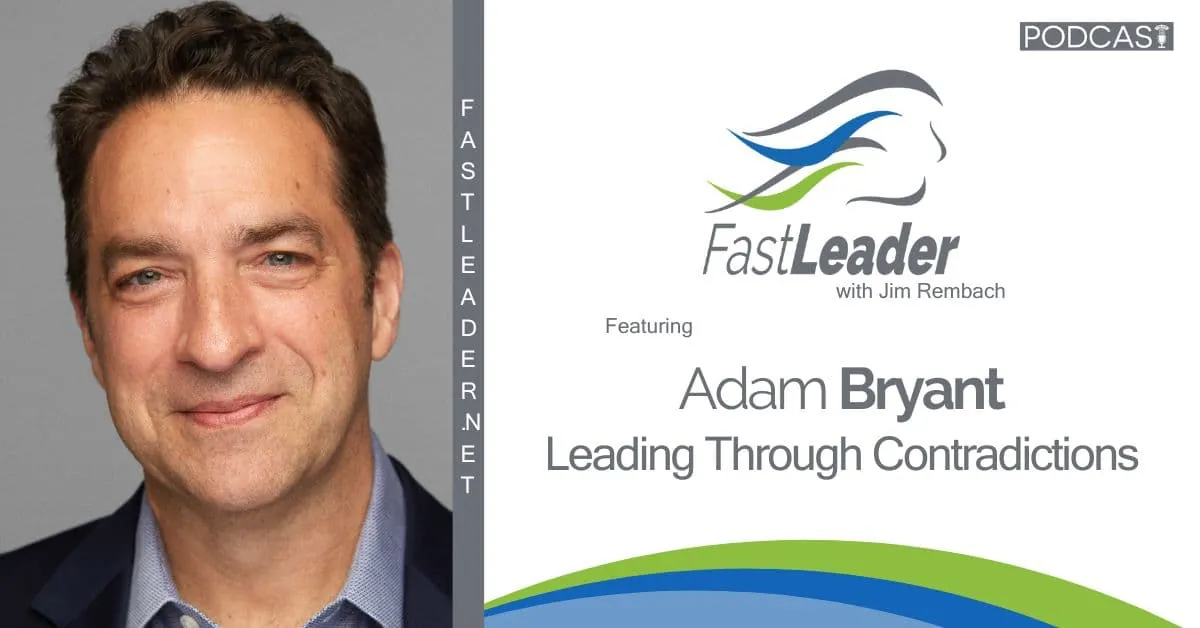
Adam’s candid discussion reveals the heightened demands on leaders today, urging aspiring managers to embrace the thrill of steering through rapid changes.
Watch on YouTube, or take the audio with you.