
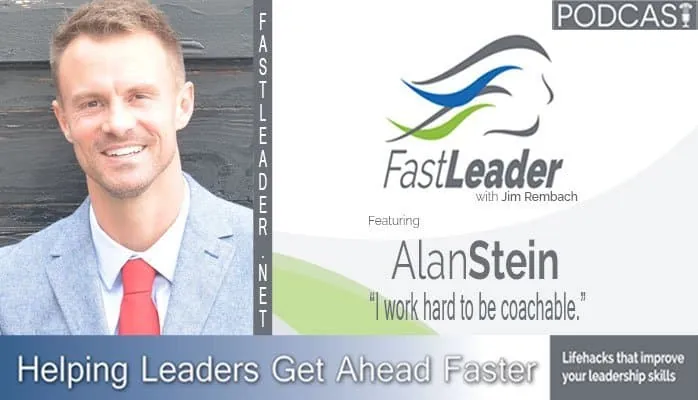
With Alan Stein
I work hard to be coachable | Alan Stein
Without supportive environmental guardrails embedded into daily routines, teams inevitably experience Execution Drift as legacy habits reclaim control.
Categoriesstrategy execution
Tagsdrift tax
Episode notes
Alan Stein Show Notes Page
High Performance and Systemic Alignment: Why Elite Intent Fails Without Structural Support
This Fast Leader Show episode is i work hard to be coachable with Alan Stein. Here is what the conversation covers, then the key insights.
Alan Stein Jr. spent two decades on the court observing the top 0.01 percent of basketball players, including Kobe Bryant and LeBron James. These elite athletes did not reach the top of their craft by isolating themselves in past success, but by actively seeking coaching to refine basic fundamentals.
Executive Summary: Key Insights
Self-Awareness and Coachability:
True operational improvement requires leaders to combine self-awareness with structural receptivity to feedback rather than relying on past achievements.
Environmental Role-Playing:
Practicing real-world customer scenarios in a controlled environment builds muscle memory before operational pressure strikes.
Systemic Execution Guardrails:
Organizations must replace voluntary leadership habits with governed operational scaffolding to eliminate friction across cross-functional teams.
In modern business, we often assume experienced leaders should automatically execute without ongoing structural support. We expect human capacity to scale by sheer willpower alone.
It does not.
Alan highlighted how sales professionals must role-play objection scenarios for thirty minutes a week to prepare for live customer conversations. Waiting to navigate a complex customer curveball during a live meeting forces the mind into a protective, reactive posture.
When leaders are pushed into continuous volatility without a safe practice environment, natural human stress responses take over to conserve cognitive energy.
Ponder that for a moment.
When pressure hits, people revert to legacy routines regardless of how many town halls or strategy decks they have attended. Under operational strain, the FONE Factors surface and pull teams back into familiar, low-effort habits.
Even Alan reflected on his own journey through therapy five years ago, realizing that having good intentions was not enough to overcome invisible personal baggage.
When organizations try to fix execution gaps by running smart people through another round of traditional training, they ignore the operating system holding those people in place. Without supportive environmental guardrails embedded into daily routines, teams inevitably experience Execution Drift as legacy habits reclaim control.
On an executive team of ten people, that operational mismatch quietly costs organizations hundreds of thousands of dollars in wasted capital every quarter. Execution is not a test of individual willpower or heroic effort. It is the predictable outcome of environmental scaffolding designed to handle post-AI velocity.
Now you know.
Operational Performance and Coachability: Frequently Asked Questions
Why do highly experienced leaders struggle to remain coachable under operational pressure?
When external complexity accelerates faster than administrative infrastructure can support, human cognitive capacity becomes saturated. Under heavy operational strain, leaders naturally shift into a protective stance to manage uncertainty, making voluntary behavior change difficult. This friction is not a character flaw or a lack of willingness; it is a predictable human response to an outdated operating system that lacks built-in environmental reinforcement.
How does traditional leadership training contribute to systemic performance drift?
Traditional training operates on the information fallacy, assuming that providing smart professionals with new concepts will automatically produce consistent execution. In reality, without supportive workflows and environmental guardrails embedded into daily routines, trained behaviors fade rapidly. The organization continues to pay for secondary remedial efforts while the underlying operating structure remains unaligned.
What is the financial impact of unmanaged operational friction across leadership teams?
Unmanaged operational friction creates a persistent drag on execution velocity, leading to delayed strategic initiatives, cross-silo miscommunication, and expensive talent burnout. When organizations rely on individual heroics rather than governed systems, they repeatedly spend secondary capital attempting to recover alignment that was already paid for at hire.
Becoming Better by Being Coachable
Alan Stein Jr. spent most of his life with qualities that weren’t so endearing. But now he works hard on his self-awareness and clarity and to be coachable and open and to help others to raise their game.
Alan was born and raised in suburbs of Washington, DC. He is the son of two retired elementary school educators and has a younger brother that he works closely with.
Alan was incredibly active as a child and gravitated to any activity that involvement movement and expending energy – from conventional sports like soccer, basketball and football – to less conventional activities like martial arts, breakdancing and BMX biking. And while he enjoyed aspects of each, his true love has always been basketball. That was Alan’s first identifiable passion.
Alan was able to play basketball at Elon College (now Elon University) down in NC and began to develop an equal affinity for performance training, strength & conditioning and basketball-specific fitness. That led him to a 20-year career as a professional basketball performance coach where he was able to work with, work alongside and closely observe the best players and coaches in the game.
Always looking for a new challenge and constantly reinventing himself, two and half years ago Alan decided to make the pivot (pun very much intended) into corporate speaking. He is now a keynote speaker and author that teaches audiences how to utilize the same strategies in business that elite athletes use to perform at a world-class level.
Alan is also the author of Raise Your Game: High Performance Secrets from the Best of the Best. This book was written for leaders in sports and business takes a deep dive into the mindsets, rituals, routines, habits and disciplines required to reach peak performance, influence and significance.
Alan is a 43-year-old amicably divorced father of 9-year-old twins sons (Luke and Jack) and a 7-year-old daughter (Lyla). He still resides in the suburbs of DC but has and is fortunate enough to travel the world!
Tweetable Quotes and Mentions
Listen to @AlanSteinJr to get over the hump on the @FastLeaderShow – Click to Tweet
“The foundational principles of leadership, it doesn’t matter what industry you’re in, they’re always going to be the same.” – Click to Tweet
“Sport can really teach some life lessons that are very difficult to teach.” – Click to Tweet
“What it takes to build a team is the same, regardless of what industry you’re in.” – Click to Tweet
“Most people think they are self-aware, but the vast majority are not.” – Click to Tweet
“Self-awareness is absolutely the foundation to which the rest of the house is built.” – Click to Tweet
“Coachability has to be a number-one mindset.” – Click to Tweet
“Almost every single dysfunction within a team is from selfishness or mis-communication.” – Click to Tweet
“Every interaction we have with a teammate is either going to strengthen our connection or erode it.” – Click to Tweet
“When you actively listen to someone, you send them the unconscious message that you care about them.” – Click to Tweet
“How we treat each other is going to have a huge impact on our children.” – Click to Tweet
“You need to connect first and coach second.” – Click to Tweet
Hump to Get Over
Alan Stein, Jr. spent most of his life with qualities that weren’t so endearing. But now he works hard on his self-awareness and clarity and to be coachable and open and to help others to raise their game.
Advice for others
Be self-aware and be open to feedback.
Holding him back from being an even better leader
Still trying to work through a few limiting beliefs.
Best Leadership Advice
It’s not about you, it’s about them.
Secret to Success
You need to connect first and coach second. Develop a love and care for the people that you lead and connect with them on a human level first.
Best tools in business or life
Emotional Intelligence
Recommended Reading
Raise Your Game: High-Performance Secrets from the Best of the Best
Leading with the Heart: Coach K’s Successful Strategies for Basketball, Business, and Life
Contacting Alan Stein
Website: https://alansteinjr.com/
Twitter: https://twitter.com/AlanSteinJr
LinkedIn: https://www.linkedin.com/in/alan-stein-jr/
Resources and Show Mentions
Raise Your Game Show with Alan Stein, Jr.
Show Transcript:
Intro: Welcome to the fast leader podcast, where we explore convenient yet effective shortcuts that will help you get ahead and move forward faster by becoming a better leader. And now here’s your host customer and employee engagement expert and certified emotional intelligence practitioner Jim Rembach.
Call center coach develops and unites the next generation of call center leaders. Through our eLearning and community individuals gain knowledge and skills in the six core competencies that is the blueprint that develops high performing call center leaders. Successful supervisors do not just happen, so go to callcentercoach.com to learn more about enrollment and download your copy of the Supervisor’s Success Path e-book now.
Jim Rembach: Okay Fast Leader legion, today I’m excited because we’re going to havesomebody on the show today who reallyhelps us bring some clarity to highperformance. Allen Stein Jr. was bornand raised in the suburbs of WashingtonD.C. He is the son of two retiredelementary school educators and has ayounger brother that he works closelywith. Allen was incredibly active as achild and gravitated to any activitythat involved movement and expendingenergy from conventional sports likesoccer, basketball, and football to lessconventional activities like martialarts, breakdancing, and BMX biking. While he enjoyed aspects of each his true love has always been basketballthat was Allen’s first identifiablepassion. Allen was able to playbasketball at Elon College, now Elon University down in NorthCarolina not too far from me, and beganto develop an equal affinity forperformance training, strength, andconditioning and basketball specificfitness. That led him to a 20-year careeras a professional basketball performancecoach where he was able to work withalongside and closely observe the best players and coaches in the game.
Always looking for a new challenge andconsistently reinventing himself two anda half years ago Alan decided to make the pivots pun very much intended as he says into corporatespeaking. He is now a keynote speaker andauthor that teaches audiences how toutilize the same strategies in businessthat elite athletes usedperform at a world-class level. Alan isalso the author of Raise Your Game: High Performance Secrets from the Best of the Best. This book was written for leaders in sports and business and takes a deepdive into the mindsets, rituals, routines, habits and disciplines required to reachpeak performance, influence, andsignificance. Alan is a fortythree-year-old amicably divorced fatherof nine year old twin sons Luke and Jackand a seven year old daughter Leila. Hestill resides in the suburbs of D.C. buthas and is fortunate enough to travelaround the world. Alan Stein, are you ready to help us get over the hump?
Alan Stein: I’m always ready. Excited to be here my friend.
Jim Rembach: I’m glad you’re here. Now I’ve given my Legion a little bitabout you but can you tell us what yourcurrent passion is so that we can get to know you even better?
Alan Stein: I’d say if we have to brush away all the cobwebsmy true passion is just filling otherpeople’s buckets. I very muchconsider myself a servant leader andtake tremendous pride in servingothers and trying to add value to theirlives. Whether it’s through somethinglike a conversation like this for apodcast or in person old or young insport or in business it doesn’t matter. If I ever feel like I’m recharging somebody’s battery or fill intheir bucket that brings metremendous fulfillment.
Jim Rembach: It’s interesting that you say that because I kind of have that same need that same passion that same fulfillment that same desire and as I was reading through your book Istarted seeing a lot of that play out from different aspects talking about high performance. It’s having that commitment as an individual thatwhole self-piece then it comes to beingable to connect with people who can helpyou do that so it’s not just giving thatbut it’s also being able to receive thatand do it in community or as acollective and that’s kind of how youactually have broken out the book youtalk about player, coach, and team. And you also mention in the book something about that transition into the business world and how very seamlessand simple it is I see it because I’minvolved with sport. I coach middleschool baseball and I see howthat has toplay out and I also see these littlemiddle school boys who really just don’tknow how to commit and play with oneanother treat each other with respectand I’m like, this is no differentthan the corporate world.
Alan Stein: So insightful with that point. That’s one of the things that helped make this transition somewhat seamless is how much transfer and crossover there is between what ittakes to be successful in sport and whatit takes to be successful in business orreally in any area of life and that the foundational principles ofleadership, of building trust, ofeffective communication, learning how to respect someone and holdthem accountable those things, itreally doesn’t matter what industryyou’re inthose principles are always going to bethe same. That’s whyI’m such a big advocate of youth sportsand I’m so happy to hear that thatyou’re a coach because that’s ultimatelyone of the major benefits. The vast majority of the young people that play sports are not going to do so professionally when they’re older but sport can be such a tremendousvehicle and platform to teach these typeof traits reinforce thesecharacteristics and provide life lessonsthat quite honestly are hard to getanywhere else. I think I reallystarted to get a much strongerappreciation for that when I became afather. My chiefresponsibilities outside of protectingmy children and providing for themis hopefully modeling and giving them thetools that they need to grow up to behappy, well-adjusted, contributors tosociety. And I find that getting theminvolved in sports and activities andhaving them be coached is going to helpthem do that to a much greater degreethan I could by myself and even agreater degree to whatteachers can do. I have ahuge affinity and love for teachers, because that’s what both of my parentsdid, but let’s be honest a mathteacher is not going to be able toimpact you in your life the exact sameway as a baseball coach or a basketballcoach so it’s important to be involvedin as many of these things as possiblefor true development.
Jim Rembach: Oh, wow, I neverreally thought about that wholeclassroom versus field issue and myresponsibility just got a lot biggerI’m worried now.
Alan Stein: And you know what’s funny is I know I positioned it that wayI don’t want it to be versus but more ofa supplement to each other asparents, as coaches, as teachers we should be concerned with working together to do what’s best for a young person’s development and there’sobviously glaring prose and strings toeach of those different domains. But I’vejust found that sport can reallyteach some life lessons that are verydifficult to teach as a teacher or evenas a father. That’s why Iencourage my kids to try as manydifferent activities and as manydifferent sports as they can.And that’s also the reason I think my message is fairly well received in thebusiness world is people know thatintuitively. They know that whatit takes to build a team is going to be thesame regardless of what industry you’rein or how old you are those principles they’re alwaysgoing to be true.
Jim Rembach: Without a doubt. One ofthe things about the sport area is thatit’s experiential you’re practicingthings you’re putting things into action. And a lot of times in a classroom that isn’t really happening you’regetting other insights andinformation that oftentimes really seemsmore difficult to apply. Also one ofthe things to me as we’retalking about this that really becomescrystal clear talking abouttranslating into the business world isthat—if we’re talking about servingcustomers if we don’t work together ifwe don’t have that feelingof self in our contribution workingcollaboratively all of those things thecustomer experience gets affected aswell.
Alan Stein: Oh, absolutely. When youtalk about the classroom, a classroom forthe most part as much as you want collaboration and so forth it’s notreally a team it’s 30 individualsthat are trying to learn on their ownand they get their own gradesit’s not the same as a team if you and I are on a baseball teamyou’re counting on me you need me to domy part you need me to practice hard. In a classroom if the kids to my leftdoesn’t do his homework thatdoesn’t affect me but on a baseball teamif the kids to my left isn’t going anddoing batting practice that could affectme in fact it will affect me becausethey’re going to end up hurting our chanceof being successful because they madethe decision not to go the extra mile orto put in the extra work so I think thatis one of the biggest differences. Andagain there’s pros to both, the self-reliance and the self-accountability of just being a solo student there’s great traits from that. But I think the team component is what makes team sports so special and thenthat’s what’s akin to business. Asyou said in business if you’re not doing what you’re supposed to do whenyou’re in the desk next to me you couldpotentially be taking lunch off of myplate. That’s where Ijust see so much harmony and alignmentbetween team sport and business.
Jim Rembach:These are all really good points. For mean for me I want to get into talking about your book, Raise Your Game becausethere are three things that stood out tome as I was going through this book and I mention again it’s in three parts, player, coach, and team. However, if you were to start to think about, real estate as far as abook is concerned, where is most of the content actually residing there’s three things that stood out to me one isself-awareness, that was a huge chunk, and then another chunk was going intothe team part under communication andcohesion. So tell us a little bit aboutwhy those three take up more real estatein this book than the others.
Alan Stein: I’m a hugebeliever that self-awareness is thefoundation to not just performance butto happiness, fulfillment, respect, influence, success, significance, you fill in the blank but those thingswould be impossible to achieve if you’re not aware. I always findself-awareness rather comical because I find it very analogous to driving. Veryfew people admit that they’re a baddriver. You spend fiveminutes out on the road we know there’splenty of bad drivers out there. There’snot very many people I think that wouldstep forward and raise their hand andsay, I’m notself-aware. I think most people thinkthey are self-aware but it’s been myexperience that a vast majority are notor at least are not as aware as they’re capable of.
The whole key with self-awareness is we have to know a starting point. We have to knowwhere we are that’s one point and thenwe have to know where we’re going, it‘s no different than GPS. Right now if someone said, hey, Jim hey Allen how do you get to Chicago? Your answer is going to be different because you’re coming from Greensboro, North Carolina I’m coming from Gaithersburg, Maryland so we’re notstarting from the same point. But you can’t give someone directions to where they want to go if youdon’t know where they’re starting youhave to have both points on the spectrum. There’s several different levels to self-awareness but self-awareness is crucial to knowing what you do well, what you love to do,what drives you and motivates you, what’s your learning style, what’s your personality style, how do you best feel appreciated knowing all that stuff. But then you also have to do the hard work and face what I wouldcall the darker side which iswhat things scare you? What are your insecurities? What are your challenges? What are your blind spots? And of course by definition you may not knowwhat your blind spots are but do youhave the humility to acknowledge thatyou do have them that you don’t have all the answers in that you need help. And kind of putting all of those things together will give you an awareness ofwho you are as a person and then ofcourse where you fit in with the organization. The example I use all of the time in basketball is a player that takes a bad shot what a coach can live with that we canteach that but a player that takes a badshot and doesn’t know it was a bad shot that’s the dangerous one because they’re going to continue to repeat that behaviorand they don’t even know they didanything wrong in the first place so self-awareness is absolutely the foundation to which the rest of the house is built.
Jim Rembach: Yeah, well there’s another part of that book in that particularsection that I like too that you’ve addressed that’s coachability component. Because with the self-awareness you have to have the humility and be coachable and take that to try to make some changes. And if you’re not going to take the coaching how much are you going to actually haveimpact on the team.
Alan Stein: Very well said, that’sthe number one trait that I would lookfor after self-awareness and someonethat I was working with. Whether it’s ayoung person on your baseball team or a CEO or an executive of fortune 500 company is, are they coachable? Because in order to be coachable you have to blend in openness with allowingyourself to be vulnerable but as we justsaid having the humility to acknowledge that you don’t have all the answers. That’s one of the things that’s been cool about being around some of these high performers whether it’s Kobe Bryant or LeBron James or Stephen Curry or Kevin Durant, these guys are already in the upper0.01% of the human population at their specific craft and yet they’re all very open to being coached in fact they craveit they beg to have someone in theirlife that can help them get just a little bit better.
Now when you’ve achieved the level of expertise andmastery that they have there’s not verymany people that can coach you becausethere’s not very many people that can add to what you need to do because you’re already so accomplished and that’s why they crave those people even more. But, yeah, coach-ability has to be a number one mindset. That also parlays a lot into Carol Dweck who wrote the book Mindset the difference between a growth mindset anda fixed mindset. To be coachableyou have to have a growth mindset andbelieve that improvement is still notonly possible but will result in all of the work that you put in.
Jim Rembach: Most definitely. Okay, okay so then going into the team side we talked about a lot of the real estate asI called it in the book being reservedfor communication and then cohesion so why those two?
Alan Stein: It’s my belief that I would say almost every singledysfunction within a team is from one ortwo things it’s either from selfishnessor it’s from communication or usuallylack of communication ormiscommunicationat least within a couple degrees of that. Communication is vital and there’s a few things that’s so important to realize in a team atmosphere. One you’re always communicating something. Even when you don’t think you’re communicating you’reabsolutely communicating something toyour teammates or those that you lead. The obvious is the non-verbals which everyone talks about. Body language, eye contact, facial expressions, tonality but I’m talking more about the unconscious message that we send in all of ourbehavior. A great example, thishappens all the time especially in the corporate world, would be if you and I are working on a team together and we’reworking on a project and I delegate animportant task to you the unconsciousmessage is I believe in you I trust you I know that you’re competent enough to do this well that’s the reason I’masking you to do it and that unconscious message is a glue that will strengthen our connection. Conversely, and this happens just as often, if I micromanage you. I give you a task but then I either literally or figuratively stand over your shoulderand breathe down your neck while you try to complete it well. Now I’m sending a completely different unconscious message I’m basically saying Jim I don’t trust youI don’t believe in you in fact I thinkyou’re such a moron there’s no wayyou’ll get this done if I’m not standingover you and that’s going to erode our connection and ultimately every interaction we have with a teammate is either going to strengthen ourconnection or erode it. And we have to be very intentional about making sure that we are as I said in the beginning filling buckets and making deposits and strengthening every connection.
So of course, more times than not if I was micromanaging you I would have noble intent I’m probably very particular that this thing gets done to a certain level I’ve worked really hard to develop the skill sets toperform at a high level and I want tomake sure that it gets done to thatquality. But the problem is that’s notthe message that you internally receiveyou look at it as, Alan doesn’t trust me he doesn’t believe in me and that will start to pull the yarn out or the thread out of our relationship and thenultimately will startto evaporate our team cohesion so that’s a big portion of it. And another big part of communication is the listening. I’m a professional speaker I get paid to talk but I know that the real gold is in the listening and that’s where you can really form strong connections. Same thing an underlying message, right nowyou’re doing a brilliant job of actively listening to me as I continue to talk. Whether you’re listening to me or it’s your listeners are listening tous when you actively listen to someoneyou send them the unconscious messagethat you care about them that have to say is important that you value what it is that they’re saying. Once again that is a glue that willstrengthen any connection. If you’re talking to someone—if you and I are out to lunch and I’m talking toyou and you keep looking down at yourphone and you keep looking out thewindow and just kind ofobligatory nodding your head I know that you’re not really listening to meand then unconsciously you’re telling me that I’m not important and that you don’t value me. And if that’s done repeatedly over time that will erode ourconnection and if that’s done in massconsistently it will start to dissolveany type of team cohesion and culture. So communication is absolutely vital and is pivotal to the greater picture ofcohesion.
Jim Rembach: As you’re talking Istarted thinking about one of thepractices that I’ve tried to do more andmore of is to be able to convey what myintent is. Because I want to remove the potential doubt and the assumptions that people will make in regards to my actions as far as some of the things that you’re talking about. So hey, if I am very particular and I this is very important to me and I and I will be able to look over your shoulder a lot more than Iwould this is why and being able toconvey that. I think once you getpast that eeriegray of perception you’re much better off and you can actually create better connections. I think people are going to be more attentive whenyou say how it is important what your intent is. You also open yourself up for feedback to say, Iknow this is what your intent is, however, this is what I’m perceiving.
Alan Stein: Absolutely, and that comes back to communication. In that instance you would be effectively communicating your intent and doing your best to dissolve any type of assumptions or preconceived notions or judgments and be able to explain that. That also parlays into that would show yourability to welcome feedback and to becoachable where you could say to me inthis instance, Alan let me apologize in advance if it seems like I’m micromanaging you but I need to make sure this is done right please know that I’d really do trust you and believe in you or I wouldn’t have asked you to do this I know you’re competent but I’m going to keep an eye on you. However, if you feel like I’m stepping on your toes alittle bit don’t be afraid to push back don’t be afraid to tell me that and give me that feedback. That type ofdialogue is incredibly productive. Andultimately what that would tell me unconsciously well, Jim does care about me he’s cares so much that he’s already looking forward and seeing that this could potentially create an issue and he’s heading that off at the pass and that he’s open for me to share my honestfeelings with him thatwill completely again close that gapof connection between us, very well said.
Jim Rembach: Without a doubt. Everything that we’re talking about here is just loaded with emotion. And one ofthe things that we look to on the showare quotes to help guide us in the right direction and give us some inspiration. Is there a quote that you can share? Can you share one or two with us?
Alan Stein: I can share a few because as a father of three it’s very similar if you ask mewhich of my children I love the most youknow I’m going to have to say all three because that’s the only politically correct answer and it happens to be true. Same thing with quotes, one of the things with quotes—I started writing down quotes when I was in middleschool back on an old school yellow legal pad with pen and paper and then of course graduated to a MicrosoftWord document and now I just havethousands of quotes because I reallylove language. There’s several that Ilove, one is and this one’s a little bitlonger and I’ve got a shorter version, if you keep doing what you’ve been doing you’ll keep getting what you’vebeen getting. If you don’t like whatyou’ve been getting you need to changewhat you’ve been doing. And I like thatcertainly it’s got a nice rhythm and flow to it but it also reeks of common sense which isif you want to get a different resultthen you need to have different behavior. I just like the way that it brings that up because most people continue to do the same thing over and over in theirlife and then they’re shocked whenthings don’t get better when theirperformance doesn’t improve. It’s like well, you’re just doing the same stuff you’ve been doing why would your performance magically improve? A shorter version of that is, if nothing changes nothing changes, so you have to be willing to make that change. I like those two. I also like, if you’re willing to do what others won’t do then you’ll have what otherswon’t have. When I was younger that always seemed to mean something monetarily or superficial like if you do things that others won’t do you’ll make a lot of money and have some toys that they won’t have. But now that I’m older and hopefully a little wiser I realize it’s the same thing withhappiness and fulfillment. Ifyou’re willing to make certainsacrifices and do certain things that most people aren’t willing to do then you’ll have a level of happiness and fulfillment that most people don’t achieve. So those are just a couple offthe top of my head but we could do awhole podcast just on quotes Oh without a doubt so I know that we start talking about all of these quotes.
Jim Rembach:Without a doubt. I know that when you start talking about all of these quotes and all this inspiration and all of that and going through your book andlooking at the things associated with being self-aware, humility, all of these things that youhad to have some humps to get over inorder to get you to this point ofknowledge and wisdom gain. Is there atime where you’ve gotten over the humpthat you can share?
Alan Stein: Yeah, the most obviousone was—and I know you had read it in my intro and I used language very specifically and intentionally. You mentioned that I’m amicably divorced and you don’t often hear those two words in the same sentence at least that’s been my experience and the reason I leadwith that is I’m very proud of the factthat even though my marriage didn’t workout that my ex-wife and I are very amicable and respects to love each other and we make excellent co-parents to our children. We both realize that how we treat each other is going to have a huge influence and impact our children and that we owe it to them to do that in the most civil and respectable and loving way possible. So, when I was going through the divorce Iactually decided to go ahead and getsome counseling or some therapy or whatever word someone wants to use and that was incredibly helpful and very enlightening. In fact, when I look back on myself I would like to believe that I’ve always had a good heart as you mentioned I’vehad good intentions I think that I was agood guy, but boy, I had a lot ofroadblocks and I had a lot of baggage I wasn’t near as self-aware as I am today same thing I lacked some humility before and in therapy certainly helps course correct that. Going through some therapy and having somebody kind of unpack these things and guide me has absolutely made me a better man which has allowed me to be a better father abetter business person a better speaker. This happened five six years ago. I’ve spent the vast majority of my life with some of those qualities that weren’t quite asendearing and it’s really neat now that she, the therapist, really helped me get over that hump and it was a very enlightening feeling and I’mso thankful. It’s also these things are not anything that you ever arrived at. I still do the work today, theinternal work, to sharpen my sword andmaster my craft and get better at thesedifferent areas. I still work onmy own self-awareness and clarity on a daily basis and those things will even flow and I work hard to be coachable and open and every once in a while I’ll find there’s times where I’m not and I’m a little resistant but Ihave now the tools where I can take astep back and take a breath and go, okay, Alan in that specific instance you were not very open to that other person’s idea alright we got to do better at that. So very, very thankful to have gotten over at least that hump and I’m sure I’ve got several more to get over for the rest of my life.
Jim Rembach: Well, I think youbring up some really good points and all of that. First of all with focus and effort and support and help that we can do things differently and get the outcomes that we desire but we have to actuallydo those things. There’s several things that I’m thinking about too from an organizational perspective that are critically important because we know that executing gettingthings done is really one of the majorroadblocks for organizations andeven when you start talking about thecustomer experience, employee experience, and being able to deliver something thatis exceptional is they struggle. Theystruggle to be able to do all of these things from an individual perspective, from a team perspective, in order to be able to have the desired outcome. When you’re talking about working with organizations that are trying to be able to deliver and differentiate, where are you finding some of their big roadblocks?
Alan Stein: A couple things one, I encourage that regardless of what industry somebody’s in that they work to make their relationships and their culture their major separator. Because we can copy technology I mean to a degree we can copy systems and processes we cancopy designs and layouts we can copyprices very difficult to copy peopleit’s very difficult to copyrelationships and it’s very difficult to copy culture. So, I love the way that you and I started this conversation talkingabout relationships and talking about creating connection and so forth. I really encourage folks to make that their secret sauce and to pour into that because it’ll pay them back heavily on the other end. As far as some of the roadblocks, it’s not really a one-size-fits-all I mean every organizations going to be slightly different with the things thatkind of get in their way but one trend that I’ve noticed you need to practice the way that you want to play and this is another one that we can pull straight out of the playbook.
I would imagine on some level, and I know it varies depending on the age of the kid that you’re working with, but I would imagine with the baseball practices that you hold. A good portion of those you’redoing things that are working on skillsexactly as they’ll be needed when theyplay in the game.Certainly there’s ways to modify certain things but I would imagine that you have different dribbles and different activities and different things that you do that try toclosely simulate what the kids will see when the actual game starts. I know for the basketball programs I’ve worked with that’s a big portion of it too. Yes, they would have a fundamentals portion where they’re working on skillwork but then they would do different situations in different scenarios and small-sided scrimmages and different time and score they would tryto mimic the game as much as possible and that’s what businesses need to do. They need to figure out what’s the outcome that they’re looking to get and then how can they best simulate that in their training or in their practice.
A perfect example would be with sales, anytype of sales professional. Itmay sound a little cliché and corny but are they doing any type of role playing? If you and I are bothsales professionals and we have to sellwidgets for our company you andI should have 30 minutes a week that we’re going back and forth and this time you pretend you’re the customer and I want you to come up with some objections and I’ll be the sales person and thenwe’ll flip it and we’ll do somethingwhere I’ll be the customer and you’ll be the sales professional andlet’s go through as many of thesescenarios as possible. That way when you actually get to a big sales meeting or you have a proposal you’re not hearing these objections for the first time you’ve prepared for them. The same way that I would prepare to be a guest on your podcast orthe way that I would prepare to deliver a keynote there has to be a preparation component. Sometimes I think folks fail to close the gap between what they need to do in preparation and what’sgoing to actually be recalled when it’s game time.
Jim Rembach: I think those are really important points and that applies to just about every single customer facing job that I come across. If you’re waiting to figure it out until you’re get in it you’re in trouble.
Alan Stein: And think too it doesn’t mean we can come up with every scenario. Let’s just say you and I we’re sales professionals were teammates we’re each working on our own commission however we want to work together because we still want thebusiness to do well. That’s very similarto a team where two players are fightingfor playing time but they’re wearing thesame Jersey. But let’s just say we do this role playing, I have a customer come in and they throw me a curve ball that I’ve never seen before. I’ve never heard objection and I haven’t practiced this specifically but there’s two things to take from that. One, ifwe’ve practiced other things I can probably bridge the gap between some of the other scenarios and find ways to apply that to this. It doesn’t meanthat I have to have been asked that veryspecific question but just the routineof practicing and going through roleplaying will better prepare me for that. But then whether I answer it well or I swing and I miss and I strikeout, to use some of your vernacular, then thekey would be to go back to the teamafterwards. And say, Jim, man that was a rough call. I just had I can’t believe it the client the client asked me this andI had no idea what to answer, what doyou think? What would you have said if they asked you this? Can we brainstorm this together and now I’ve got that one logged so that if someoneever asks that one again I’ll be fullyprepared. And that’s ultimately whatexperiences is, experience is accumulation of all of these different things that we’re doing. That’s whymore times than not outside of, just say, likeability and raw charisma a veteransales professional is probably going todo better than a new sales professionalbecause they’ve seen so many other scenarios they’ve gotten in a lot more reps when it comes to selling. That would be something that I would highlyencourage is we can have asales meeting for 30 minutes a weekwhere we do some role-playing and thenwe all bring up some of the successesand challenges that we’ve had in recentcalls. Because if I’m a good teammate I’m also going to say, Jim, you’re not going to believe it the customer asked me this question and this was the answer I gave them and it blew their socks offthey started just throwing money at me. So I just wanted to share that withyou in case someone ever asks you the same question that you’d be able to do the same thing for them.
Jim Rembach: We learn best in community. Thank you for actually putting together this body ofwork and we hope you and raise your gamegets the very best that it deserves. Now before we move on let’s get a quick word from our sponsor.
An even better place to work is an easy-to-use solution that gives you a continuous diagnostic on employee engagement along with integrated activities that will improve employee engagement and leadership skills in everyone. Using this award winning solutions guaranteed to create motivated, productive and loyal employees who have great work relationships with their colleagues and your customers. To learn more about an even better place to work visit beyondmorale.com/better.
Okay, Fast Leader legion, it’s time for the Hump day Hoedown. Okay Alan, the Hump day Hoedown is a part of our show where you give us good insights fast. So I’m going to ask you several questions and your job is to give us a robust yet rapid responses that are going to help us move onward and upward faster. Alan Stein, are you ready to hoedown?
Alan Stein:I am ready to rock androll.
Jim Rembach: Alright. What do you think is holding you back as a better leadertoday?
Alan Stein: I still have a few limitingbeliefs that I’m trying to work through. I’ll hear something at face value and sometimes dismiss it is something that I can’t do. I’m working now to be able to break throughand have a limitless type belief.
Jim Rembach:What is the best leadership advice you have ever received?
Alan Stein: It’s not about you it’s about them. And that needsto be the lens at which you look through everything. As a leader it’s not aboutyou it’s about them.
Jim Rembach: What’s one ofyour secrets that you believecontributes to your success?
Alan Stein: I was taught at a very young age that you need to connect first and coach second.Develop a care and a love for the people that you lead and connect with them on a human level first and then you can work on leading them and coaching them, you can’t do it if you reverse the two.
Jim Rembach: Whatdo you feel is one of your best toolsthat helps you lead in business or life?
Alan Stein: Emotional intelligence without question.
Jim Rembach: What would be one book that you’d recommend to our Legion, it could be fromany genre, of course we’re going to put alink to Raise Your Game on your shownotes page as well.
Alan Stein: The first book thatabsolutely had a monumental impact on mewas Leading with the Heart by Coach K, the head coach of Duke men’s basketball.
Jim Rembach: Okay, Fast Leader legion you can find links to that and other bonus information from today’s show by going to fastleader.net/alanstein. Okay, Alan, this is my last Hump Day Hoedown question: Imagine you were given the opportunity to go back to the age of 25. And you can take the knowledge and skills that you have now back with you but you can’t take it all, you can only choose one, so what skill or piece of knowledge would you take back with you and why?
Alan Stein: I would take back self-awareness becauseat 25 I was severely lacking it. I onlyhad a very narrow view of myselfand the good and the bad so absolutely I’d go back with that self-awareness. If the 25 year oldAlan would have been open to listeningto that advice I think he could havecould have sidestepped a lot of heartache and landmines and challenges.
Jim Rembach: Alan, it was an honor to spend time with you today can you please share with the fastleader Legion how they can connect with you?
Alan Stein: Absolutely, pleasure was very mutual I enjoyed this conversationyou asked some wonderful questions I hada lot of fun. If they’re interested inthe book they can go to, raiseyourgamebook.com. If they’re interested in myspeaking or anything else I do they cango to alansteinjr.com and I’m @AlanSteinjr on LinkedIn and Instagramand all of the major social handles andI love engaging with people on social. Ifanyone was listening to this if something resonated you want to drop me a line I would love to start some dialogue.
Jim Rembach: Alan Stein Jr., thank you for sharing your knowledge and wisdom the Fast Leader Legion honors you and thanks you for helping us get over the hump. Woot! Woot!
Thank you for joining me on the Fast Leader Show today. For recaps, links from every show special offers and access todownload and subscribe, if you haven’t already, head on over a fastleader.net so we can help you move onward and upward faster.
END OF AUDIO
Fast Leader Show is the official podcast of Execution Architects. To build alignment with a post-AI operating system, visit executionarchitects.com.
Share this episode
Get over the hump
Watch on YouTube, or take the audio with you.