
It’s time to reboot feedback | Tamra Chandler
When strategic velocity outpaces human capacity, unguided feedback creates systemic noise, leading directly to Execution Drift across core operating units.
That transition from personal survival to guiding others mirrors the sharp pivot every technical expert faces when stepping into executive management.
Categoriesenterprise velocity
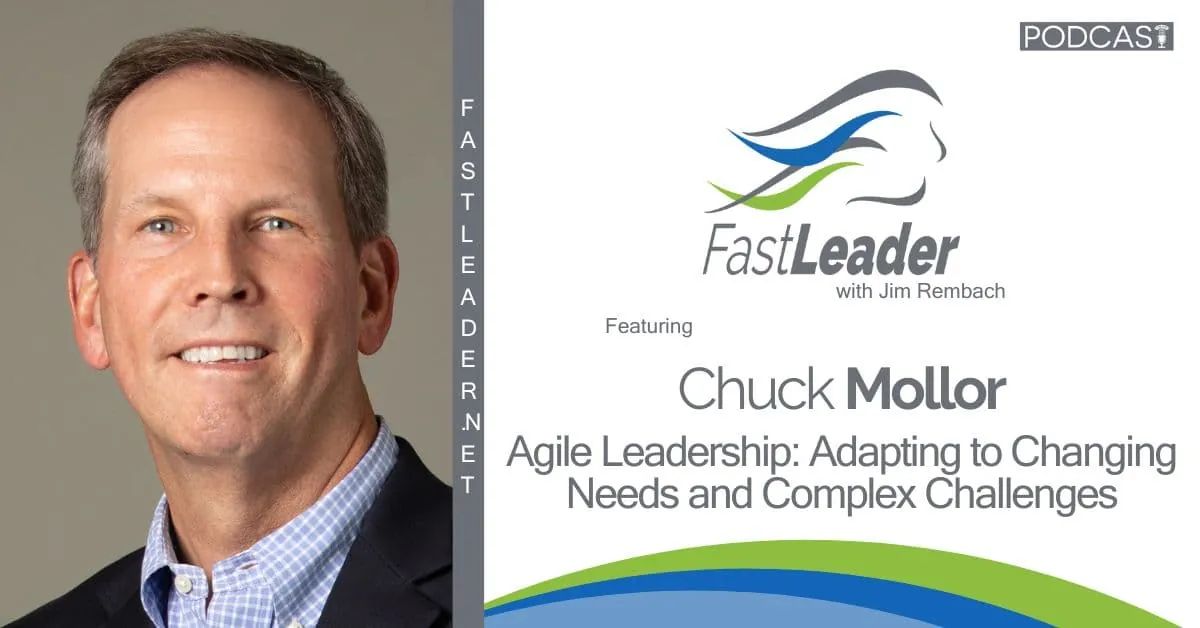
This Fast Leader Show episode covers agile Leadership: Adapting to Changing Needs and Complex Challenges. Here is what the conversation covers, then the key insights.
That transition from personal survival to guiding others mirrors the sharp pivot every technical expert faces when stepping into executive management. We achieve initial success through individual technical prowess, but sustaining impact requires flipping our focus entirely from personal output to enabling the performance of our teams.
Executive Summary: Key Insights
The Capacity Shift:
Advancing into organizational leadership requires transitioning from individual technical capability to cultivating collective team success.
Diagnostic Alignment:
Categorizing workforce behaviors into structural engagement tiers helps leaders identify where friction drains operational momentum.
Systemic Overrides:
Sustainable agility depends on supportive environmental scaffolding rather than relying on individual willpower under post-AI complexity.
When Chuck Moller shared his personal journey on the show, he recalled losing his father in a car accident at two and a half years old, watching his mother raise three young children while learning English, and finding a pivotal second chance in high school through baseball, soccer, and summer camp counseling. That transition from personal survival to guiding others mirrors the sharp pivot every technical expert faces when stepping into executive management. We achieve initial success through individual technical prowess, but sustaining impact requires flipping our focus entirely from personal output to enabling the performance of our teams.
That shift is where most traditional operating models fracture.
In our conversation, Chuck highlighted how executive teams struggle with workforce alignment when diagnosing four distinct employee profiles: culture champions, grinders, silent killers, and contaminators. When low performers with low engagement pull down organizational momentum, executive teams often blame personal attitude rather than examining the underlying legacy operating system. Research from the Leadership Execution Institute shows that human capacity is consistently overwhelmed by modern operational velocity, triggering protective reflexes like The FONE Factors across management layers.
Sit with that.
And I will be honest with you – I missed this myself for years. Holding onto misaligned talent out of fear of open requisitions creates hidden structural drag across every department. When an organization lacks supportive system design, high performers are forced to overcompensate for operational gaps, which accelerates burnout and accumulates a steep The Drift Tax across the P&L. Overcoming this drag is not a matter of demanding more effort or running another round of compliance training. It requires upgrading our legacy operating frameworks to provide the environmental scaffolding leaders need to maintain clarity and stability.
Knowing what you know now, what would you do differently?
Technical professionals advance by mastering individual processes and operational detail, but executive leadership demands a complete structural pivot toward enabling collective workforce outcomes. Legacy operating systems fail to provide mid-level managers with the environmental scaffolding required to handle high-velocity decision-making. Without supportive system design, managers default to reactive micromanagement under operational pressure.
Tolerating persistent disengagement and low performance out of fear of open requisitions creates compounding systemic friction across teams. High-performing employees spend excessive cognitive capacity absorbing operational defects and coordination gaps, which drains overall productivity. This operational drag degrades baseline margins and increases the hidden financial cost of repurchasing talent stability.
Traditional training relies on the flawed assumption that delivering information alone will change long-term workplace behavior. Human capacity naturally degrades when post-AI operational velocity exceeds legacy administrative design, causing leaders to revert to familiar routines. Sustainable behavioral alignment requires upgrading the underlying operating architecture to guide and reinforce execution directly within the daily workflow.
In this episode of the Fast Leader Show, we’re excited to have Chuck Mollor – executive coach, consultant, and author of The Rise of the Agile Leader. Chuck shares various insights on the importance of leadership adaptability, understanding oneself, and teamwork in navigating complex challenges and change. He also discusses employee engagement, identifying cultural champions, and the need for leadership accountability.
Chuck emphasizes the relevance of having a strong company culture foundation, which can impact financial performance and differentiate the brand. He also delves into the topic of categorizing employees into various groups and emphasizes the importance of retaining top talent. Lastly, we touch on Chuck’s book and its valuable insights for leadership. Tune in to this thought-provoking episode that will equip you with practical tips and strategies for effective leadership.
Chuck Mollor was born in Ridgewood, NJ, and raised in New Rochelle and Larchmont, NY. He grew up with two younger sisters, only 1 and 2 years younger. His Father was killed in a car accident when he was 2 ½ years old. His mother, who grew up in Switzerland, raised the three of them on her own while learning English, looking for a job, and dealing with a variety of health issues.
He was very active with sports and music. Both were essential releases for him growing up in a very humble and challenging childhood. He was fortunate enough to receive a second chance in HS, which gave him greater confidence and a more significant belief in himself and his potential. Baseball and soccer gave him greater confidence. He attended summer camps, and becoming a summer camp counselor had a strong impact early on in identifying leadership qualities.
Chuck started early in management consulting and continued in that field for most of his career. He experimented in working with small, privately owned, and large firms but always gravitated towards challenges, building or changing practices and capabilities.
In 1995, Chuck built his own practice, and after five years he went on to a few other adventures which helped him realize he could take the next steps to meet his goals. 15 years ago, Chuck started his firm and became an executive coach.
He is immensely proud of his legacy of being a father to his four children. He enjoys all of his outstanding colleagues and finds incredible joy in the difference he can make in the lives and effectiveness of leaders and their organizations. Chuck is passionate about helping others achieve success.
Chuck currently lives outside of Boston, MA, with his four children.
Listen to @ChuckMollor get over the hump on the @FastLeaderShow – Click to Tweet
“Leadership is not just a title. It’s not just a role and a responsibility. But it’s also a craft; it’s a skill set. It’s an ability that takes a lot of dedication and time and development.” – Click to Tweet
“It’s really about their success now, not your success.” – Click to Tweet
“Frankly, bigger companies, even the Fortune 500, are starting to realize that their individual business units or functions or capabilities have to be run in the more entrepreneurial, leaner, more agile way.” – Click to Tweet
“Culture, to me, is the foundation for success. It’s reflective of your strategy, your mission, and most importantly, your purpose.” – Click to Tweet
“It’s about having that sort of clarity, but also candid transparency I like to refer to as having a courageous dialogue.” – Click to Tweet
“If you don’t make those investments, you don’t have that future. Next generation of leaders, reorganization.” – Click to Tweet
“How they regret or what they would do differently when it comes to how they run their business, it’s recognizing that they don’t move quickly enough when it comes to people.” – Click to Tweet
“How much time are you investing yourself to really understand yourself and what kind of leader you are and what kind of leader you aspire to be?” – Click to Tweet
Foster self-awareness for effective leadership and personal well-being. Developing self-awareness is a crucial practice for success as a leader and personal fulfillment. Gain a deep understanding of your strengths and weaknesses to navigate pressure and stress effectively.
Lack of focus.
Stop and think about how much time you’re leading versus how much time you’re managing.
Chuck’s website: https://mcgpartners.com/
Chuck’s LinkedIn: https://www.linkedin.com/in/chuckmollor/
Chuck’s Twitter: https://twitter.com/ChuckMollor
Chuck’s book: https://amzn.to/3MXcFBq
Fast Leader Show on YouTube: https://www.youtube.com/c/FastleaderNet
Fast Leader Show on Apple Podcast: https://apple.co/364qAA2
Fast Leader Show on Facebook: https://www.facebook.com/FastLeaderShow
Fast Leader Show on Twitter: https://twitter.com/fastleadershow
Fast Leader Show on LinkedIn: https://www.linkedin.com/company/fastleader.net
Check out other episodes on agile leadership: https://www.fastleader.net/resilient-leadership
Thanks for tuning into this week’s episode! If the information in our weekly conversations and interviews have helped you in your journey, please head over to Apple Podcasts, subscribe to the Fast Leader Show, and leave us an honest review.
Your reviews and feedback will not only help us continue to deliver great, helpful content, but it will also help us reach even more amazing people just like you!
Fast Leader Show is the official podcast of Execution Architects. To build alignment with a post-AI operating system, visit executionarchitects.com.
When strategic velocity outpaces human capacity, unguided feedback creates systemic noise, leading directly to Execution Drift across core operating units.
Under high operational velocity, human biology defaults to risk aversion, causing teams to endlessly seek more data or chase shiny objects.
Legacy operating systems rely on manual enforcement, which forces leaders to spend energy managing friction rather than driving strategic velocity.
When an enterprise relies on an outdated administrative design to handle modern operational velocity, subtle friction converts into severe Execution Drift.
Watch on YouTube, or take the audio with you.