
Unleashing Strategic Success
We see the exact same dynamic when leaders attempt to navigate career transitions or enterprise growth using traditional forward-looking roadmaps.
Tag
Growing leaders inside the Kinetic Chain of Execution so talent compounds instead of liquidating.
We see the exact same dynamic when leaders attempt to navigate career transitions or enterprise growth using traditional forward-looking roadmaps.
As class ended, a student patted the top of his own head and remarked on the great lecture, signaling that the material had gone completely over his head.
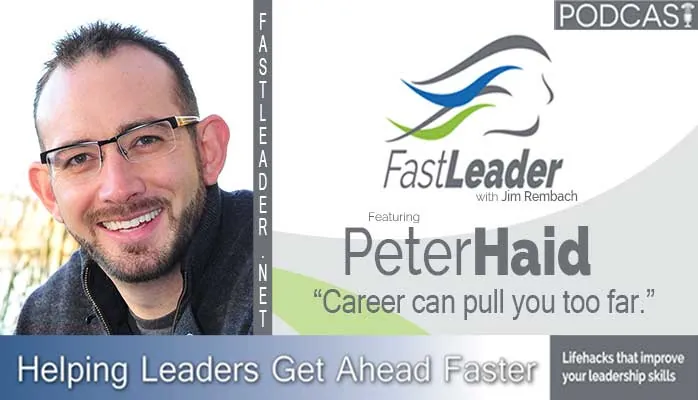
The throughline connecting all the dots in his career, or what some would call his “Blue Flame,” is this: helping people find new ways to be successful.
When frontline leaders are forced to manage cross-silo coordination through manual oversight, biological autopilot routines take over to conserve energy.
This creates internal coordination drag, forcing teams to spend vital cognitive capacity managing internal processes rather than delivering market value.
Traditional training programs operate under the assumption that providing smart people with better information automatically produces consistent execution.
Early in his career, Sean Ryan found himself at twenty-six years old managing thirty-five veteran technical professionals at Pacific Gas and Electric.
What employees told us they wanted more than anything else out of a career conversation with their boss was creative ways to use their skills and talents.
That reality forces leaders to operate with agility, extracting insights directly from local consumers rather than relying on heavy historical playbooks.

His parents realized quite quickly that unless agriculture or an associated career was what they wanted, they and their children had to leave South Dakota.
Leading from the middle simply means that you lead a team, sometimes many teams are hundreds of people, and simultaneously reports someone as your boss.
Most HR initiatives stall because organizations attempt to drive behavioral shifts using administrative mandates rather than structural environment design.
Leaders often assume that strategic failure comes from a lack of talent or clear directions, forcing teams through endless compliance workshops.
This friction forces constant executive intervention, delays strategic decision-making, and increases voluntary turnover among high-performing talent.
He is an Eagle Scout and is passionate about helping young people learn life skills, develop character, and navigate the sometimes-difficult teenage years.
This drag erodes operational margins because leadership ends up deploying secondary capital to resolve coordination failures and replace exhausted talent.
In fact, the attributes component has become a huge contributor to a whole thing I do with clients that’s grown over the recent years called career vision.
Earlier in my career, I assumed that providing technical experts with more data and tighter goals would automatically produce better operational execution.
Jim Rembach: Gosh, you know as you were talking, thanks for sharing that, I started even thinking about an internal person whose an expert in their career.
When leaders lack the supportive structures needed to align their teams, the resulting confusion causes skilled talent to disengage and eventually depart.
When strategic execution drifts, organizations routinely pay a steep, unmeasured financial penalty through lost leadership capacity and talent liquidation.
Frontline workers must constantly navigate complex digital tools, siloed communications, and customer emotional states, which drains their daily capacity.